FAA aircraft dispatcher training that connects classroom learning, flight-planning practice, and preparation for the knowledge and practical examinations.
School admission does not establish FAA test eligibility, and completing training does not issue a certificate. Use this checklist to plan each step.
1. School admission
Review the selected class’s prerequisites and enrollment agreement.
Check the school’s admission age, English-language expectations and any requested documents.
Reserve the full attendance schedule and time for independent study.
Review tuition, examination charges, equipment and cancellation terms.
A pilot certificate or aviation job is not required to explore the beginner course. Prior experience or requested training credit needs an individual evaluation.
2. FAA examinations
The minimum age for the ADX knowledge test is 21.
Prepare for the knowledge areas in § 65.55 and the practical test in § 65.59.
For the practical test, arrange acceptable knowledge-test evidence, training or experience documentation, identification and the examiner appointment.
Check the validity of your documents and any applicable exception with the examiner; do not assume a graduation date is an exam booking.
3. Certificate issuance
Be at least 23 years old.
Read, speak, write and understand English.
Pass the required knowledge and practical tests.
Meet the experience or approved-training requirement in § 65.57.
A diploma or employer background check may be a school or hiring requirement. They are not listed as general FAA certificate requirements in § 65.53.
You may meet the knowledge-test age requirement while still being too young for certificate issuance. Ask the school and examiner to map the timing and documentation for your circumstances before paying for travel or examinations.
YOUR CLASS / CURRENT PUBLISHED DETAILS
Build your training plan.
January
In person · 5 weeks
Jan 04, 2027 – Feb 05, 2027 1827 Walden Office Square Suite 460, Schaumburg, IL 60173
Required attendance
Students are expected to attend all scheduled class sessions and arrive on time.
Completion of the required 200 hours of instruction is necessary to successfully complete the course.
Students must promptly notify Flight Innovation if they will be absent or late.
Missed instructional time may need to be made up before course completion.
Consistent attendance, participation, and engagement are essential for success in the program.
Class-specific prerequisites have not been published. Confirm them before enrollment.
Minimum age to receive FAA Aircraft Dispatcher Certificate: 23
Speak, Write, Understand English.
Requirements questions
Do I need to be a pilot?
No pilot certificate is listed in the general dispatcher eligibility requirements. The approved-course pathway provides training; the alternative experience pathway has specific criteria that must be documented.
Does previous aviation work shorten the course?
Credit is not automatic. Under § 65.61(d), the course operator evaluates comparable experience or training and documents any allowed credit. Discuss it before choosing a class.
What should I prepare now?
Check your age against the examination and certificate milestones, read the class prerequisites, compare the attendance schedule with your commitments, and plan tuition, exam fees and travel. Use the enrollment panel to review the actual agreement.
THE FOUNDATION
200 hours. Connected learning.
Flight Innovation’s approved course develops the knowledge behind dispatch decisions. An FAA-approved aircraft dispatcher course includes at least 200 hours of instruction; calendar length and daily schedules depend on the selected class.
Plan for class attendance and focused study outside scheduled instruction. You’ll practice interpreting information, applying rules, explaining your reasoning, and preparing a flight plan.
Before you enroll
Review the class’s eligibility requirements, attendance expectations, location or delivery format, tuition, included materials, and examination fees. Contact the academy if you need help deciding whether the program fits your circumstances.
WHAT YOU WILL LEARN
Subjects that work together.
01 / CURRICULUM
Aviation weather
Interpret observations and forecasts, recognize weather hazards, and connect changing conditions to flight planning.
02 / CURRICULUM
Navigation & flight planning
Work with charts, routes, airports, alternatives, and the information needed to prepare a flight plan.
03 / CURRICULUM
Aircraft & performance
Relate aircraft systems, weight and balance, runway conditions, and performance limits to a proposed flight.
04 / CURRICULUM
Regulations & procedures
Understand the rules and operating procedures that shape dispatch responsibilities and decisions.
05 / CURRICULUM
Operational judgment
Practice communication, resource management, and responses to changing conditions and emergencies.
06 / CURRICULUM
Practical application
Bring the subjects together in dispatch exercises and explain the reasoning behind your plan.
Course completion, examination results, and certificate eligibility are separate milestones. The academy can help you understand their order and the documentation required.
Review FAA requirements and the selected class’s prerequisites before making travel or payment arrangements.
Complete the approved training.
Attend instruction, complete assigned work, and build practical dispatch skills.
Pass the ADX knowledge test.
Prepare for the FAA Aircraft Dispatcher knowledge examination and coordinate its timing with the academy.
Complete the oral and practical examination.
Demonstrate your knowledge and planning skills to an authorized examiner. Passing a course alone does not issue an FAA certificate.
Complete certification and prepare for opportunities.
Meet the FAA’s issuance requirements, then work on your résumé and interview preparation. Hiring decisions and any employer training remain with the employer.
Choose the dates that fit.
Tuition, available funding methods, format, and the daily schedule are shown with each class. This overview stays here whenever you need to revisit the bigger picture.
YOUR DESK. YOUR DECISIONS. Select a screen to step inside the flight.
01 / Weather — read the atmosphere
01 / WEATHER LAB
Read the sky. Stay ahead of it.
Change the picture. Move the clock. See how the questions change.
NORTHFIELD / FICTIONAL WEATHERNow
SKYClear picture
VISIBILITYGood
TRENDSteady
Illustration only · no live radar or forecast
01 / SET THE WEATHER
Now+1 hour+2 hours
THE DISPATCHER’S PERSPECTIVE
See beyond the forecast.
A clear picture is a starting point. Continue reviewing observations and forecasts along the whole flight.
Fictional conditions for exploration. Real decisions require current observations, forecasts, flight-specific limits, and coordination with the crew.
02 / Routing — connect the decisions
02 / ROUTING LAB
The sky changes. What changes next?
Two fictional airports. Two possible routes. Introduce a weather change, then compare what each choice means.
NORTHFIELD → LAKEPORTInitial picture
A · Direct B · Wider trackSCHEMATIC · NOT TO SCALE
01 / CHANGE THE CONDITIONS02 / COMPARE THE ROUTES
THE DISPATCHER’S PERSPECTIVE
Start with the whole picture.
The direct route covers less distance. The wider route takes a different track. If weather develops across the direct route, that shorter path needs a fresh review.
Distance: shorter trackWeather: initial picture
A teaching illustration, not a flight-planning tool. Real dispatch decisions require current information, aircraft calculations, regulations, and coordination with the crew.
03 / Performance — know the aircraft
03 / PERFORMANCE LAB
Same aircraft. Different demands.
Adjust the conditions and explore what deserves a closer look.
PERFORMANCE / CONCEPT LABBaseline
09
RELATIVE PLANNING DEMAND
LowerHigher
Lighter aircraftCooler airDry runway
Concept illustration · no takeoff distance or weight limit calculated
LighterHeavier
CoolerHotter
03 / RUNWAY SURFACE
THE DISPATCHER’S PERSPECTIVE
Start with the aircraft data.
Even in favorable conditions, dispatchers review the approved aircraft performance data and the actual runway. This illustration cannot determine whether a takeoff is possible.
The gauge shows a teaching trend, not a performance calculation or a takeoff decision. Actual limits depend on approved aircraft data, airport conditions, and operating requirements.
STEP INSIDE / THE ACADEMYYOUR TRAINING TAKES SHAPE HERE.
A place to focus. Room to grow.
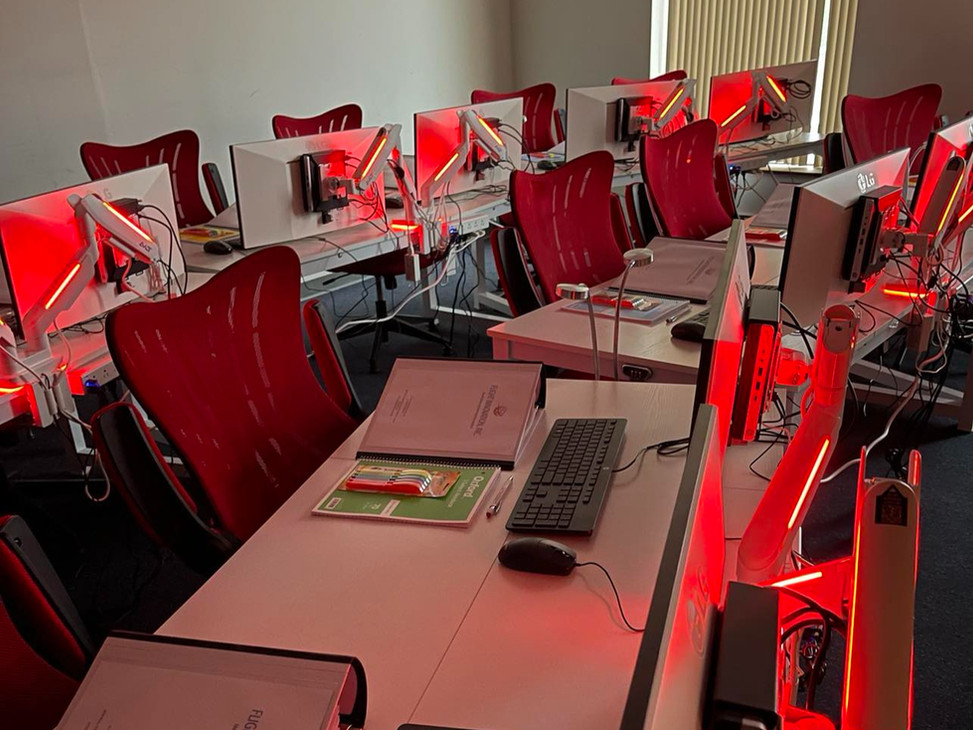
Explore real photographs of the Flight Innovation classroom. Select a detail to take a closer look at the learning environment.
Build your understanding of weather, regulations, flight planning, and aircraft performance.
02PREPARATION
Practice with intention.
Apply what you learn to dispatch scenarios, work through questions, and prepare for assessment.
03EXAMS & CERTIFICATION
Demonstrate your knowledge.
Complete the required assessments and certification steps. Your class details explain the program’s preparation and requirements.
04CAREER SUPPORT
Prepare for your next chapter.
Discuss career preparation and alumni resources with the academy as you explore opportunities in aviation.
FLIGHT INNOVATION / COURSE REQUIREMENTS
Published by Flight Innovation. Class prices and dates come from the current public catalog; confirmed expenses carry their own verification dates.
Approvals & disclosures
Flight Innovation, Inc. · Schaumburg, Illinois
FAA
Flight Innovation’s Aircraft Dispatcher Certification Course is FAA approved.
IBHE
Approved by the Division of Private Business and Vocational Schools of the Illinois Board of Higher Education.
Flight Innovation, Inc. is not accredited by an accrediting agency recognized by the United States Department of Education.
GI Bill® & veterans’ education benefits
We are approved by the Illinois State Approving Agency for federally funded programs of education for veterans and other eligible beneficiaries.
GI Bill® is a registered trademark of the U.S. Department of Veterans Affairs (VA). More information about education benefits offered by VA is available at the official U.S. government website at www.benefits.va.gov/gibill.
Affirm
Financing through Affirm depends on eligibility and the purchase. A down payment may be needed; available options and terms can vary. Learn how Affirm works and review its lending partners.