Customer service or healthcare
Listening carefully, communicating under pressure and following a structured handover can transfer to learning dispatch communication.
Aircraft dispatchers work on the ground with flight crews to plan, release, and monitor airline flights. It’s a career built around judgment, preparation, and clear communication.
A WORKING DAY / ILLUSTRATIVE EXAMPLE
A dispatcher may work several flights at different stages. This example illustrates the work; schedules, responsibilities and procedures depend on the airline and operation.
Review active flights, weather trends, airport restrictions and unresolved items. Check what needs attention first and clarify anything missing from the previous shift.
Evaluate a proposed route, fuel and alternatives with the available weather and aircraft information. Share relevant changes with the crew while continuing to monitor other assigned flights.
If thunderstorms affect an arrival, compare options and coordinate an appropriate response using approved procedures. Record the decision and brief the next dispatcher on unresolved issues.
Practice question: a destination forecast worsens while an aircraft is en route. What information changed, which sources would you check, and what would you communicate first? This is a discussion exercise, not operational guidance or a complete flight plan.
Listening carefully, communicating under pressure and following a structured handover can transfer to learning dispatch communication.
Tracking dependencies, adjusting plans and documenting changes provide useful habits. Aviation rules and dispatch procedures still need to be learned.
Checking units, testing assumptions and explaining evidence can help with weather interpretation and flight-planning exercises.
Use specific examples of communication, judgment, teamwork and accuracy. Keep claims and qualifications verifiable.
Practice discussing a training scenario: the information you reviewed, your assumptions, options and reasoning. Be clear about what was an exercise rather than employment experience.
Read the current vacancy for location, experience, schedule and hiring steps. Use Airline Insights for research, then verify pay and conditions directly with the employer.
FROM THE ACADEMY
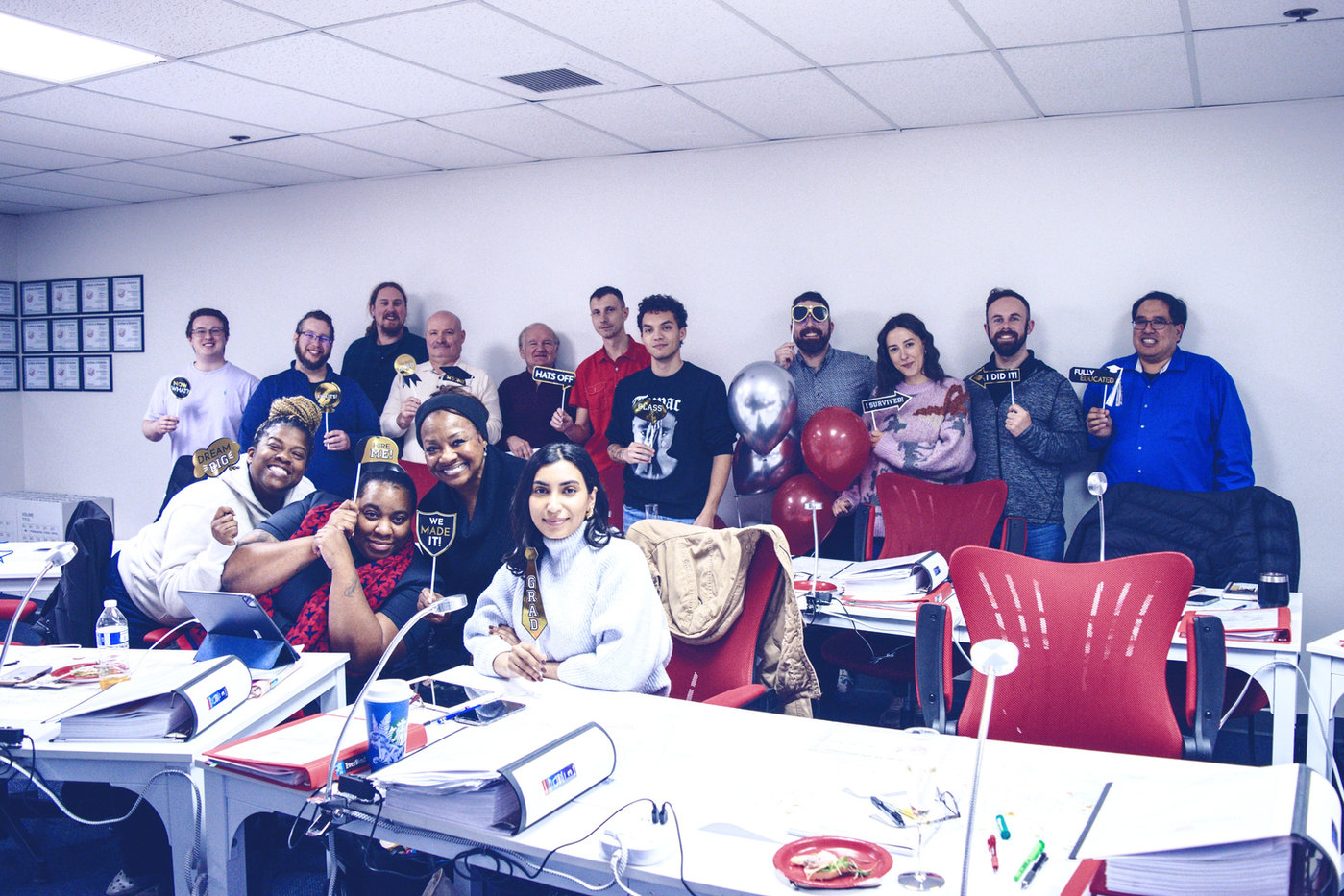
Meet the instructors and see the academy’s graduation photographs. Ask admissions about the training experience and the career preparation available for your selected program.
Meet the Flight Innovation team ↗The approved-course route is available to people who meet admission and FAA requirements. Expect to learn a new vocabulary and work steadily on technical subjects.
Hiring timing depends on vacancies, your qualifications and the employer’s process. Plan financially for a job search; course completion and certification do not guarantee employment.
WHAT DISPATCHERS DO
A flight plan brings many conditions together. Dispatchers help the crew understand those conditions and keep reviewing them as a flight progresses.
For U.S. domestic airline operations, the dispatcher and pilot in command share responsibility for preflight planning, delays, and dispatch release. The captain commands the aircraft in flight. 14 CFR 121.533
Review weather and airport conditions. Consider routing, fuel, aircraft limits, and alternatives while preparing the flight plan and release.
Monitor progress, share information that affects the flight, and coordinate with the crew when conditions change.
Evaluate delays, rerouting, cancellation, or redispatch when the flight cannot continue as planned.
IS THIS YOUR DIRECTION?
You do not need previous airline experience to begin Flight Innovation’s course. You do need time to study, a willingness to work through detailed information, and the motivation to keep learning.
Build aviation knowledge step by step, then connect it to practical dispatch decisions.
Airline employees and pilots can develop a broader understanding of flight planning and operational coordination.
Analytical thinking, teamwork, and communication can be useful foundations for a new field of study.
Airline operations run beyond a traditional office day. Consider shift work, the demands of time-sensitive decisions, and whether you can relocate for an opportunity. Employers set their own hiring requirements; training and certification do not guarantee employment.
Compare pay, schedules, and working life, then explore dispatcher job resources.
Explore the subjects, study expectations, and examination steps before choosing a class date.
Course overview ↗FLIGHT INNOVATION / DISPATCHER CAREERS
Published by Flight Innovation. Class prices and dates come from the current public catalog; confirmed expenses carry their own verification dates.
Flight Innovation, Inc. · Schaumburg, Illinois
Flight Innovation’s Aircraft Dispatcher Certification Course is FAA approved.
Approved by the Division of Private Business and Vocational Schools of the Illinois Board of Higher Education.
Flight Innovation, Inc. is not accredited by an accrediting agency recognized by the United States Department of Education.
We are approved by the Illinois State Approving Agency for federally funded programs of education for veterans and other eligible beneficiaries.
GI Bill® is a registered trademark of the U.S. Department of Veterans Affairs (VA). More information about education benefits offered by VA is available at the official U.S. government website at www.benefits.va.gov/gibill.
Financing through Affirm depends on eligibility and the purchase. A down payment may be needed; available options and terms can vary. Learn how Affirm works and review its lending partners.
Flight Innovation, Inc. is a BBB Accredited Business. View our BBB profile.
Approval and benefit eligibility depend on the school, program and location. Confirm eligibility for your selected offering before enrolling.
Explore. Ask. Get started.
Opening Copilot… Open full page